Inspiring people to live healthier and longer
Education, Research and Coaching

Biography
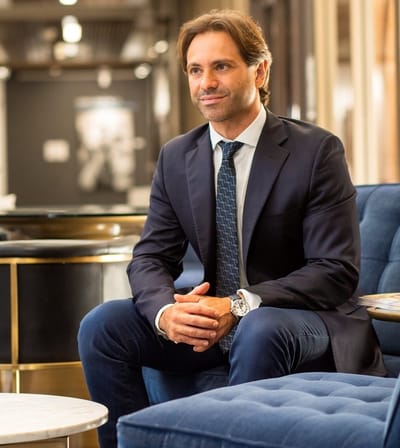
His expertise in nutrition, metabolism, and chronic disease management has allowed him to publish numerous scientific articles in peer-reviewed journals in these fields. Together with his innate and proven public speaking abilities and multiple language skills, Dr. Vicinanza has inspired and trained thousands of people around the world to embrace healthier nutritional habits and lifestyles.
Dr. Vicinanza grew up in the historical city of Rome. Since his adolescence, he has understood the importance of being a citizen of the world, which led him to travel and study abroad, learning different languages (English, Spanish and French), and exposing him to different cultures and ways of life. Dr. Vicinanza comes from very modest means. The challenges he has faced in his life have allowed him to develop a positive attitude and deep problem-solving skills by embracing obstacles as opportunities for the growth and development of his personality and abilities.
His passion for the medical sciences and the influence of the academic minds he has surrounded himself with, have pushed him forward and allowed him to make an impact upon the world around him. It is this background that has motivated and inspired Dr.Vicinanza to change his life and the lives of others in a meaningful way: whether it is other colleagues, students, or patients.
In 2008, Dr. Vicinanza received the degree of Doctor of Medicine cum laude from Sapienza University of Rome, defending his thesis on the effects of Thyroid Hormone and LDL-cholesterol on Nitric Oxide production in human endothelium. He received the I migliori della Sapienza Scholarship (the best of Sapienza) by Fondazione Roma Sapienza which allowed him to move abroad and join the UCLA Center for Human Nutrition and work alongside Dr. David Heber, who is an internationally recognized expert in the fields of nutrition, metabolism, and obesity. This afforded him a unique opportunity to combine his education in medicine with his passion for using nutrition as a preventive strategy to delay the onset of chronic diseases.
In 2012 Dr. Vicinanza moved back to his Alma Mater to receive his Doctorate of Philosophy (Ph.D) in Molecular Medicine, defending his thesis on the biological effects of specific phytonutrients for cancer prevention, and he then pursued his clinical fellowship in Geriatric Medicine at Policlinico Umberto I University Hospital in Rome, where he conducted clinical studies on cardiometabolic disorders and mood disorders in older adults.
He then returned to the U.S. to join the Cohen Lab at the University of Southern California, Leonard Davis School of Gerontology, where he largely focused his research on understanding the health benefits of the Mediterranean Diet in the geriatric population and the role of mitochondrial microproteins in age-related diseases.
As an Associate Professor, Dr. Vicinanza is currently teaching several courses at the USC Leonard Davis School of Gerontology including the fundamentals of nutrition for the Master of Science in Nutrition, Healthspan, and Longevity coordinated program.
Academic Career
Associate Professor of Gerontology
Associate Professor of Gerontology at University of Southern California, Leonard Davis School of Gerontology.
University of Southern California (USC)
Assistant Professor of Gerontology at University of Southern California, Leonard Davis School of Gerontology.
Specialist in Geriatric Medicine
Board Certification in Geriatric Medicine from Sapienza University of Rome, Italy. Final Degree Grade: 70/70 cum laude; Supervisor: Prof. Vincenzo Marigliano. Thesis: Aging and Adherence to the Mediterranean Diet: Relationship with Cardiometabolic Disorders and Polypharmacy.
Postdoctorial Training - Univerisity of Southern California (USC)
Research and Teaching fellowship at University of Southern California, Leonard Davis School of Gerontology.
Doctor of Philosophy - Sapienza Univerisity of Rome
Ph.D. in Molecular Medicine with the supervision of Prof. Alberto Gulino and Prof. David Heber. Thesis: "Cellular and molecular mechanism of action of pomegranate metabolites in prostate cancer. In vitro and in vivo study. Implication of gut microbiome metabolism for cancer prevention.
Post-Doctorial Training - Univerisity of California Los Angeles ( UCLA)
Visiting researcher at UCLA Center for Human Nutrition, Los Angeles. California. Dr. Vicinanza was trained in clinical and molecular nutrition from Prof. David Heber, who plays an internationally prominent role in the fields of nutrition, metabolism and obesity.
Graduation in Medicine and Surgery - Sapienza University of Rome
Medical Doctor Degree with highest honors (110 e lode) Dr. Vicinanza defended his thesis on the mechanism of action of 3,5,3'-triiodothyronine and cholesterol LDL- and oxLDL on nitric oxide synthase activation pathway in human endothelial cells.
School of Medicine - Sapienza University of Rome
Sapienza, University of Rome. Rome Italy
High School Diploma in Languages - Liceo linguistico G.Carducci, Rome, Italy.
High School Diploma in languages (liceo linguistico) with distinction 100/100 at liceo linguistico G.Carducci, Rome, Italy.
Empowering aging research with nearly $150,000 in funding
We are committed to further expansion.
Collaborations with ToP INSTITUTIONS

A lifestyle intervention designed to support functional longevity in older adults.
The approach integrates Mediterranean dietary principles tailored for older adutls aimed at improving physical function, cardio-metabolic function and cognitive functions.
Ongoing work is focused on further evaluation and scalable implementation.